Troubleshooting Common AC Issues: A Quick Guide

Salt River Air • October 21, 2025

Even as the October weather in Arizona begins to cool down, your air conditioning (AC) system remains essential for those warmer days. At Salt River Air, we understand the importance of a dependable AC system all year long and want to help you troubleshoot common issues before they become serious. This guide addresses frequent problems and offers solutions to maintain your home's comfort.


Understanding Your AC System


Before diving into troubleshooting, it’s crucial to understand the basic components of your AC system. Your air conditioner consists of the compressor, condenser coil, evaporator coil, and refrigerant. These elements work together to remove heat from your home and release it outside. Understanding these parts can help you identify potential issues.


AC Won't Turn On


A common problem arises when your AC unit refuses to start. Begin by checking your thermostat settings to ensure it’s set to “cool” and the temperature is below your current room temperature. If settings are correct and the problem persists, inspect the circuit breaker—it may have tripped. Reset it if necessary. If the AC still won't start, it could indicate a deeper electrical issue that needs professional attention.


AC Not Cooling Even When Running


If your AC runs but fails to cool, it might suggest an issue with the refrigerant or airflow. Check the air filter first; a clogged filter can restrict airflow, reducing efficiency. Replace filters every 1-3 months, especially during high-use seasons. If replacing the filter doesn’t resolve the issue, the refrigerant might be low, potentially due to a leak. Refrigerant issues should be handled by a professional—contact our skilled technicians for a thorough assessment.


Uneven Temperature Distribution


Experiencing hot and cold spots in different rooms? This might be due to an imbalanced system or blocked vents. Ensure that all vents in your home are open and unobstructed by furniture or drapes. Also, consider investing in a smart thermostat to optimize and even out temperature control throughout your home.


Strange Noises Coming from AC


Unusual sounds like rattling, buzzing, or grinding are clear signs of potential issues. Loose parts, debris in the unit, or problems with the fan motor might cause these noises. A rattling sound usually suggests loose components, while buzzing may signal electrical problems. If troubleshooting by tightening screws or removing debris doesn't remove the sounds, professional intervention is advised to prevent further damage.


Musty or Unpleasant Odors


Detecting a musty smell when your AC runs may suggest mold or mildew growth in the ducts or on the evaporator coil due to moisture build-up. Regular maintenance and cleaning are crucial to prevent this. If odors persist, professional cleaning of the ducts and coils might be necessary. Our indoor air quality solutions at Salt River Air are designed to tackle these issues, ensuring you breathe cleaner, healthier air.


High Energy Bills Despite Regular Use


An unnoticed issue is often high energy bills despite no change in AC usage. This could result from reduced efficiency due to aging components, poor insulation, or lack of maintenance. Scheduling regular HVAC maintenance checks can help identify and resolve inefficiencies, saving you money over time.


When to Call a Professional


While some minor issues can be handled DIY-style, many AC problems require the expertise of a trained technician. At Salt River Air, our certified professionals are ready to assist with any AC repair needs, ensuring your system is back to optimal performance.


Keep Your Cool with Salt River Air!


Don't let AC issues disrupt your comfort this fall. Utilize this guide to troubleshoot common problems, but remember, when in doubt, it’s best to consult an expert. Our friendly and knowledgeable staff at Salt River Air are just a call away, ready to provide you with top-notch service and ensure your home remains a comfortable retreat.


Reach out today at and experience the Salt River Air difference. Your comfort is our priority, and we promise professional service with no surprises, just peace of mind and a comfortable home environment. Keep cool, Arizona!


Share This Blog
Rectangular metal wall vent with horizontal slats on a silver surface
By Salt River Air LLC • October 14, 2026
Thinking about cheap duct cleaning deals? Salt River Air LLC explains the plain truth about proper brush methods, high-powered vacuums, and clean air.
Hands using a wall-mounted touchscreen thermostat in a modern kitchen.
By Salt River Air LLC • September 22, 2026
Wiring a Wi-Fi thermostat incorrectly can short out your HVAC board. Learn the safest installation methods from the pros at Salt River Air LLC today.
Man installing a ceiling vent cover in a bright kitchen
By Salt River Air LLC • September 16, 2026
Is one room always too hot? Leaky or crushed air ducts waste energy. Discover how Salt River Air LLC diagnoses and replaces failing HVAC duct systems.
Technician in blue cap and gloves inspecting a wall-mounted unit with exposed pipes and wiring
By Salt River Air LLC • September 8, 2026
Booking your heating system check now prevents October breakdowns. Salt River Air LLC explains the cost of delaying your annual furnace maintenance.
Technician in blue overalls repairing a white air conditioner unit outdoors
By Salt River Air LLC • September 2, 2026
Dust and debris block airflow and drive up bills. Learn how Salt River Air LLC performs a proper AC tune-up to protect your compressor from failure.
Wall-mounted white air conditioner on a beige wall beneath ceiling tiles.
By Salt River Air LLC • August 25, 2026
Will a mini-split actually lower your electric bill? Salt River Air LLC explains the real ROI and installation challenges for older East Valley homes.
Outdoor HVAC unit beside a modern gray house wall with windows and grass.
By Salt River Air LLC • August 19, 2026
Upgrading your HVAC? Read this honest breakdown of heat pump installation costs, sizing calculations, and energy savings from Salt River Air LLC today.
Woman sitting on a rug in a living room, looking at her phone beside a couch and coffee table.
By Salt River Air LLC • August 11, 2026
Hosting for Labor Day? Stop dusty vents from ruining the party. Follow these trade-tested tips for better indoor air quality from Salt River Air LLC.
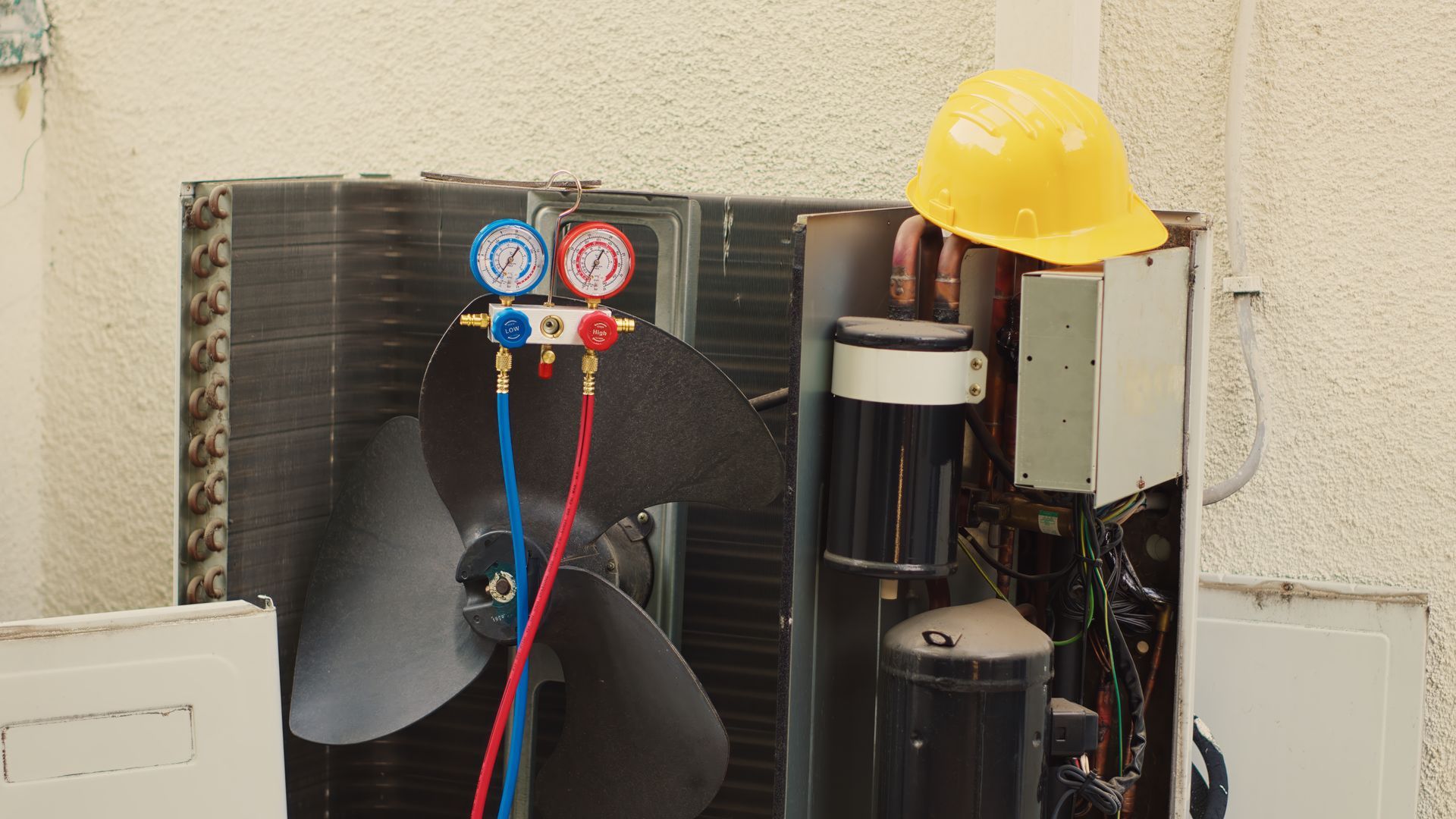
HVAC unit with gauges and hoses, yellow hard hat resting on top, against a stucco wall
By Salt River Air LLC • August 5, 2026
Late summer heat tests every air conditioner in the area relentlessly. You might notice the air blowing from your vents feeling weak or barely cool when the harsh afternoon sun hits the roof. The team at Salt River Air LLC sees this exact scenario play out every single summer. We know how frustrating it is to deal with a failing cooling system when you need that relief the most. Our goal is to help you understand why outdoor compressors fail and when you need professional AC repair to fix the root cause. Ignoring the early warning signs usually leads to a complete breakdown during the hottest part of the day. A quick response protects your equipment and keeps your family safe from the extreme seasonal temperatures. Let us walk through the most common reasons your system struggles late in the season. What We Cover: The Impact of Dirty Coils on Compressor Lifespan Electrical Stress During Peak Demand Hours Why Does My Air Conditioner Stop Cooling in the Late Afternoon? Why DIY Refrigerant Recharges Destroy Equipment Protecting Your Investment Before September The Impact of Dirty Coils on Compressor Lifespan The outdoor unit sits exposed to dust storms and yard debris all year near the Superstition Mountains. When the condenser coils get coated in dirt, the system cannot release heat properly into the outside air. The compressor has to run longer and harder to reach the temperature set on your thermostat. This constant mechanical strain overheats the internal motor and eventually leads to permanent failure. → A quick tip to remember: Washing the outside unit gently with a garden hose once a season prevents heavy dirt buildup from choking the system. Electrical Stress During Peak Demand Hours Late summer afternoons push the electrical grid to its absolute limits across the region. Your air conditioning unit requires a massive surge of electricity just to start the cooling cycle. If the electrical components like the capacitor or contactor are weak, the compressor struggles to turn on and draws excessive amperage. This electrical struggle creates excess heat that burns out the internal wiring over time. This is a pattern the team at Salt River Air LLC hears regularly when parts begin to wear out. ► Client Experience: Friendly service and very quick repair to get our heat back up and going. My service techs were Alberto and Tony. Last week we had the condenser in the air conditioner go out. 2 day turn around and we were back up and running. Julio diagnosed the issue effectively and the team came out to get it done. When ever we have called they have answered with great service! Fast and accurate electrical diagnostics keep small component failures from destroying the entire condensing unit. → From a professional standpoint: Replacing a cheap dual run capacitor today saves you from buying a thousand dollar compressor tomorrow. Why does my air conditioner stop cooling in the late afternoon? Your system might stop cooling late in the day because the compressor overheats and shuts itself down on a thermal overload safety switch. The unit absorbs the highest ambient temperatures right when your house demands the most cooling power. If the airflow is restricted by a dirty filter or the refrigerant charge is slightly off, the system simply cannot keep up with the heat load. It takes a trained eye to track down whether the issue is airflow, low refrigerant, or a failing electrical component. Why DIY Refrigerant Recharges Destroy Equipment Homeowners sometimes try to add freon themselves using cheap gauge kits bought online. Air conditioning systems operate on very specific pressure and temperature scales that require calibrated digital gauges to measure subcooling and superheat. Adding too much refrigerant sends raw liquid straight into the compressor valves and breaks them instantly. You end up needing a massive AC repair bill or a complete system replacement just to fix a minor initial issue. → A quick tip to remember: Never connect a refrigerant hose to your system without proper EPA certification and diagnostic tools. Protecting Your Investment Before September Fixing an overheating system early keeps you comfortable and extends the operating life of your equipment. A proper diagnostic check pinpoints exactly what is causing the strain so we can replace the faulty part right away. Call our dispatch team to get an expert technician out to your home today.